
<div style="max-width:1400px; margin:0px auto;">
<div itemscope="" itemtype="https://schema.org/FAQPage"><h2 style="text-align:center;">FAQ's</h2><div itemprop="mainEntity" itemscope="" itemtype="https://schema.org/Question">
<button class="faqs-accordion" itemprop="name"><span class="h3-faq"><h3>What lighting is recommended for use with Outdoor Projector Screen Paint?</h3> </span></button>
<div itemprop="acceptedAnswer" itemscope="" itemtype="https://schema.org/Answer" class="faqspanel">
<div itemprop="text">
<div class="faqsp">
<div class="faqs-content">
Outdoor Projector Screen Paint is intended for outdoor environments with high ambient lighting.<br /><br /></div></div>
</div>
<meta itemprop="position" content="1">
</div>
</div><div itemprop="mainEntity" itemscope="" itemtype="https://schema.org/Question">
<button class="faqs-accordion" itemprop="name"><span class="h3-faq"><h3>Where can I apply Outdoor Projector Screen Paint?</h3> </span></button>
<div itemprop="acceptedAnswer" itemscope="" itemtype="https://schema.org/Answer" class="faqspanel">
<div itemprop="text">
<div class="faqsp">
<div class="faqs-content">
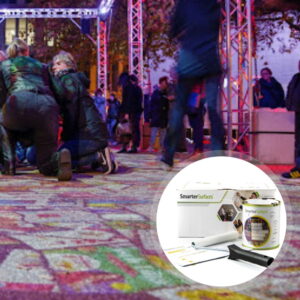
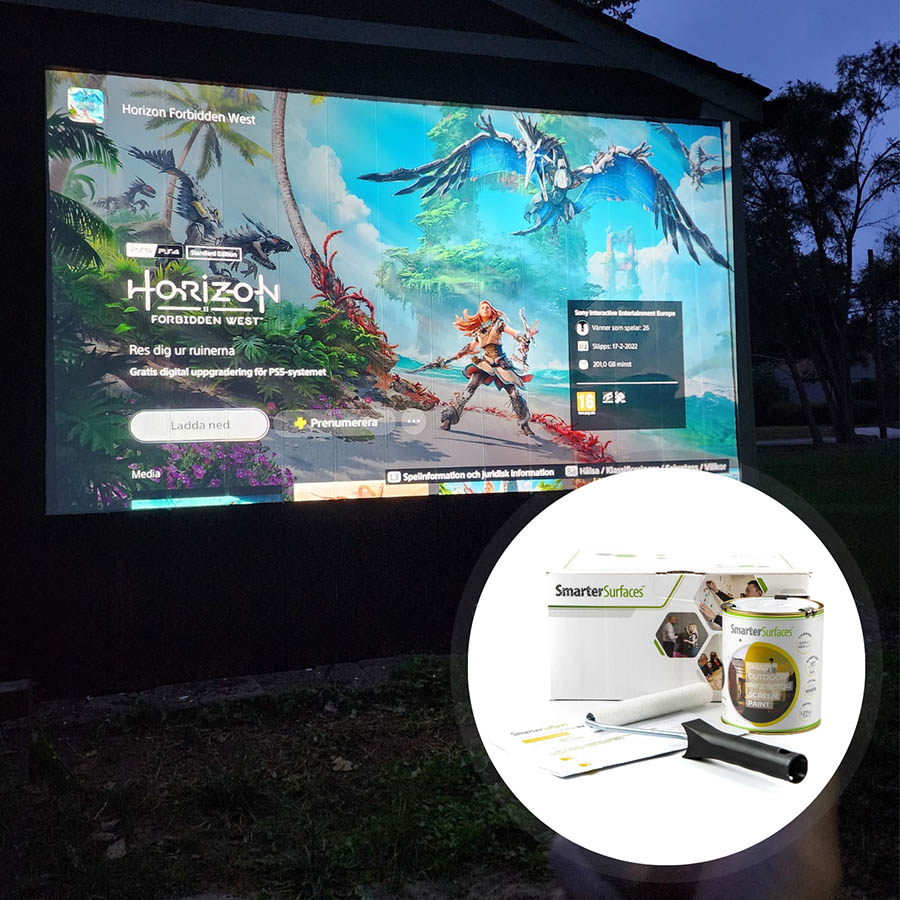
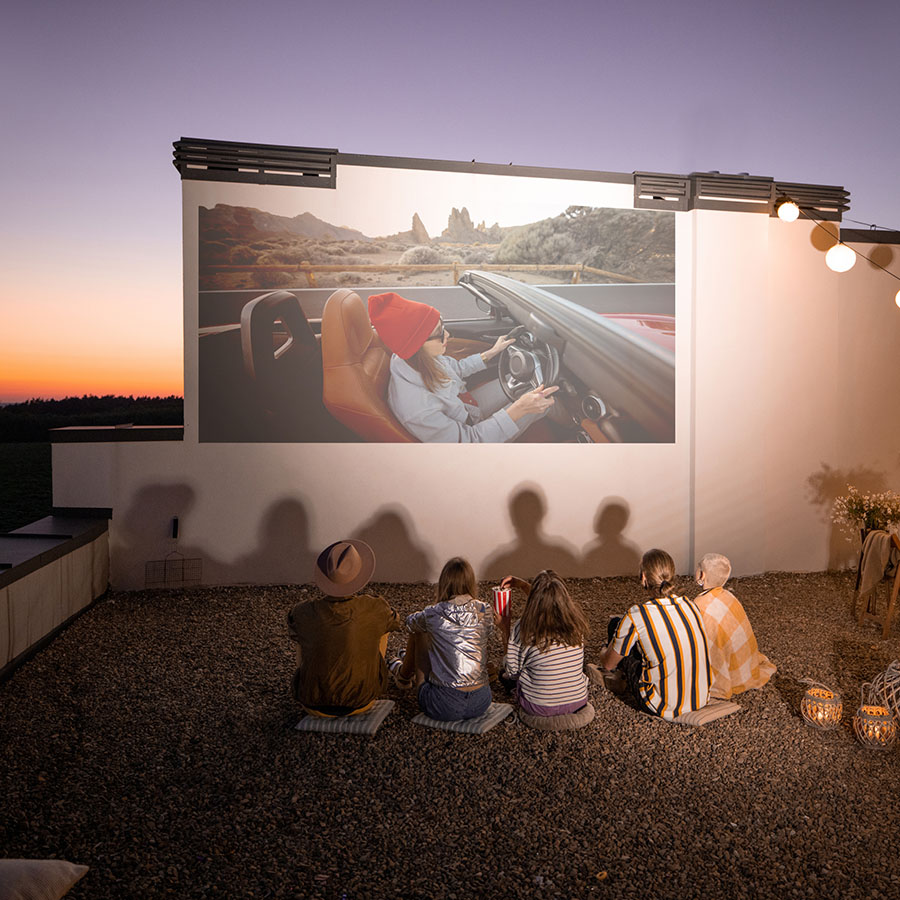
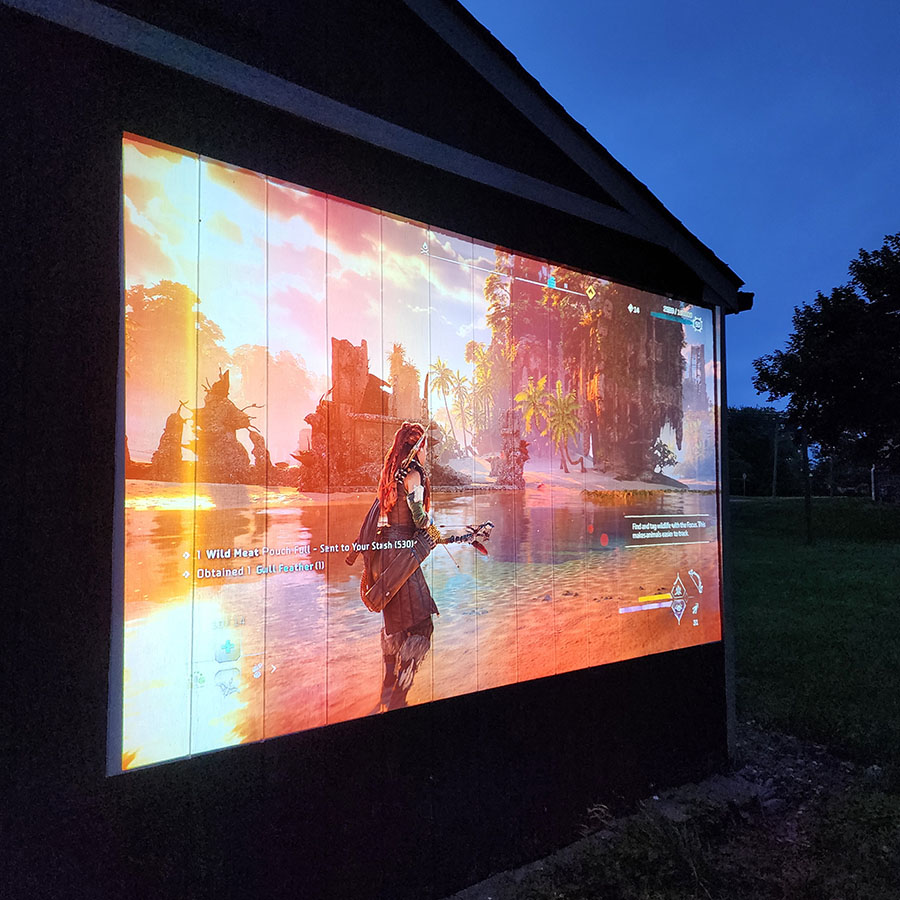
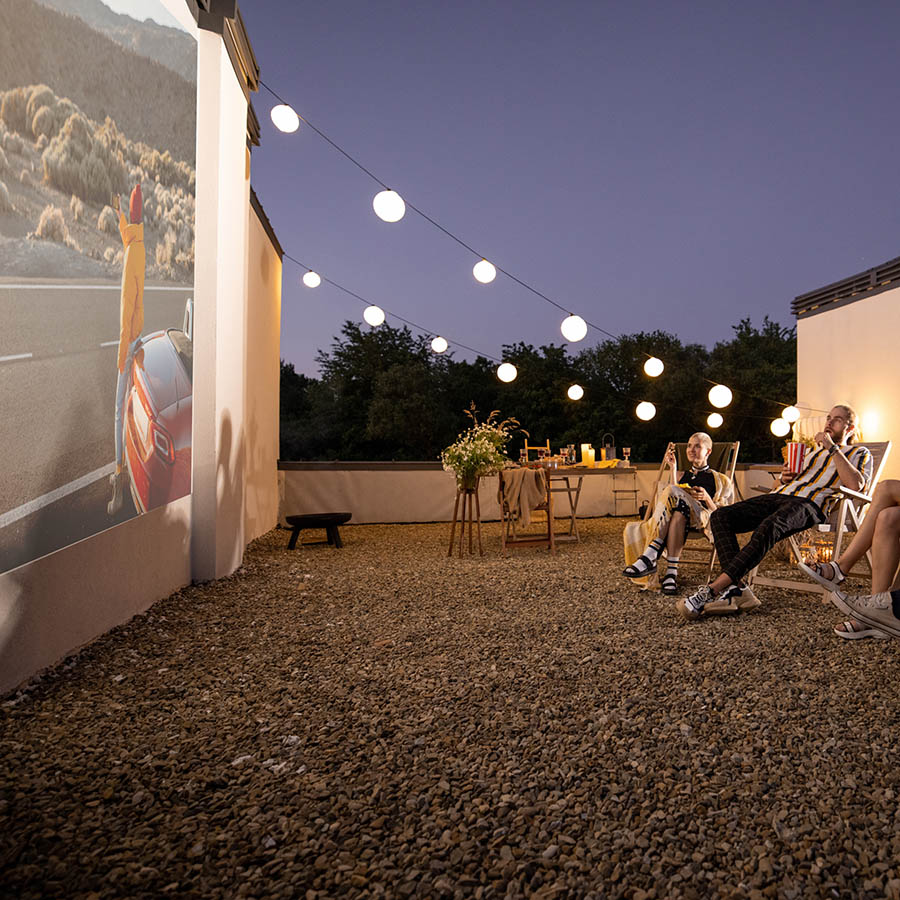
Outside projection screen paint is ideal for outdoor spaces with high ambient light levels. Maximize your outdoor space with clear picture quality for events, beer gardens, or home installations. Project football matches, music videos, or marketing ads on external walls or floors, day or night.<br /><br /></div></div>
</div>
<meta itemprop="position" content="2">
</div>
</div><div itemprop="mainEntity" itemscope="" itemtype="https://schema.org/Question">
<button class="faqs-accordion" itemprop="name"><span class="h3-faq"><h3>Why Do Our Outdoor Projection Paints Offer Acoustic Transparency?</h3> </span></button>
<div itemprop="acceptedAnswer" itemscope="" itemtype="https://schema.org/Answer" class="faqspanel">
<div itemprop="text">
<div class="faqsp">
<div class="faqs-content">
The Sound Absorption Coefficient (SAC) is the measure of the amount of sound energy absorbed by a substance when sound waves travel through it. In our test, we assess the SAC for a 12mm gypsum board, a typical building material.<br /><br />The SAC could vary depending on the frequency of the sound waves going through the substance. Different types of sound waves have varying wavelengths, which can interact with the material in a variety of ways. As a result, the SAC values offered are a range of values, as the SAC varies with the frequency of the sound waves absorbed. In our testing, we recorded the following outcomes:<br /><br />Unpainted Board α = 0.04-0.07<br />
Painted Board α = 0.04-0.07<br /><br />The values provided are for a 12mm gypsum board that is unpainted and painted. The range of SAC values for these materials is indicated by the α values of 0.04-0.07 for both the unpainted and painted board. This implies that a portion of the sound energy emitted by sound waves passing through a 12mm gypsum board will be absorbed by the material, with the absorption rate varying between 0.04-0.07, based upon the frequency of the sound energy. Nevertheless, it also suggests that each of our coatings is acoustically transparent, as there is no difference between the standard board and the painted one.<br /><br /></div></div>
</div>
<meta itemprop="position" content="3">
</div>
</div><div itemprop="mainEntity" itemscope="" itemtype="https://schema.org/Question">
<button class="faqs-accordion" itemprop="name"><span class="h3-faq"><h3> What does it mean for Outdoor Projector Screen Paint to "preserve polarity"?</h3> </span></button>
<div itemprop="acceptedAnswer" itemscope="" itemtype="https://schema.org/Answer" class="faqspanel">
<div itemprop="text">
<div class="faqsp">
<div class="faqs-content">
Three-dimensional projectors work by putting two slightly different images on the screen at the same time. When these images are put through certain optical filters, the light is polarised in a way that is different for each display. Each lens blocks one of these images when you look at them through special 3D glasses. It implies that your left eye sees one image and your right eye sees another image.<br /><br />When you use a 3D projector, the projection screen you choose mustn't change the direction of the light. "Polarity preserving" means that all of our paints will give you the same image polarity as the original, keeping the full 3D effect.<br /><br /></div></div>
</div>
<meta itemprop="position" content="4">
</div>
</div><div itemprop="mainEntity" itemscope="" itemtype="https://schema.org/Question">
<button class="faqs-accordion" itemprop="name"><span class="h3-faq"><h3> Can the Outdoor Projector Screen Paint be used with blended projections?</h3> </span></button>
<div itemprop="acceptedAnswer" itemscope="" itemtype="https://schema.org/Answer" class="faqspanel">
<div itemprop="text">
<div class="faqsp">
<div class="faqs-content">
Blending projections is a common technique for generating immersive and dynamic visual experiences in a variety of settings, including art installations, theatres, and vast presentations. The choice of projection screen is critical for creating smooth and unified presentations. Our projection screen paint is great for merging many projections on a single surface. Our projector paint's advanced method is particularly developed to make mixing easier and produce superior results.<br /><br />To create a seamless transition between projected images, projection blending requires accurate color accuracy, equal brightness, and great light dispersion. Our projection screen paint incorporates all of these features, allowing you to create a unified and immersive display.<br /><br />When it comes to large-scale displays, our projection screen paint eliminates the need for bulky and expensive physical screens, giving you a more versatile and cost-effective way to combine projections. Transform any space into a fully immersive canvas in which many projections blend seamlessly, enthralling your audience.<br /><br /></div></div>
</div>
<meta itemprop="position" content="5">
</div>
</div><div itemprop="mainEntity" itemscope="" itemtype="https://schema.org/Question">
<button class="faqs-accordion" itemprop="name"><span class="h3-faq"><h3> Are 2D and 3D projectors compatible with the Outdoor Projector Screen Paint?</h3> </span></button>
<div itemprop="acceptedAnswer" itemscope="" itemtype="https://schema.org/Answer" class="faqspanel">
<div itemprop="text">
<div class="faqsp">
<div class="faqs-content">
Our complete range of paints is compatible with both 2D and 3D projectors, guaranteeing optimal performance despite the projection mode. When a 3D image is projected onto our paint, it seamlessly produces the desired effect, resulting in an immersive viewing experience when coupled with 3D glasses.<br /><br /></div></div>
</div>
<meta itemprop="position" content="6">
</div>
</div><div itemprop="mainEntity" itemscope="" itemtype="https://schema.org/Question">
<button class="faqs-accordion" itemprop="name"><span class="h3-faq"><h3> How to put on Outdoor Projector Screen Paint?</h3> </span></button>
<div itemprop="acceptedAnswer" itemscope="" itemtype="https://schema.org/Answer" class="faqspanel">
<div itemprop="text">
<div class="faqsp">
<div class="faqs-content">
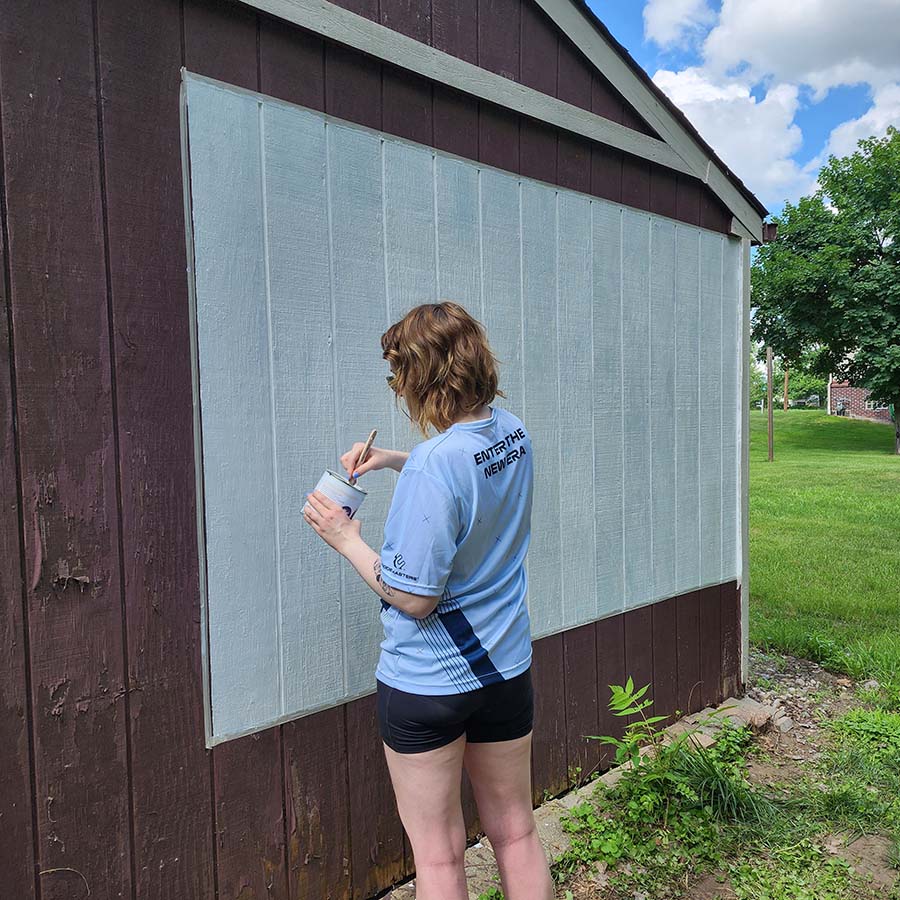
Outdoor Projector Paint is designed to be applied to the external of buildings, it is typically applied with a roller, brush or spraying.<br /><br />Surfaces that are to be painted should be dry, clean, and free of loose debris, with any holes or cracks repaired. For buildings that have high levels of debris or dirt build up pressure washing with water is recommend if required. Ensure you have enough product to cover the area required. New surfaces such as external plaster or wood should be painted with two coats of primer first such as <a href="https://smartersurfaces.com/product/white-primer-paint/" title="Smart White Primer">White Primer</a> or a smooth exterior white paint.<br /><br />Please note that if the Outdoor Projection Screen Paint is applied to a heavily textured surface, you may need extra paint as the coverage will be reduced due to the texture. Before application, stir the paint thoroughly. Use a short-pile sleeve to apply two coats, allowing the first coat to dry before applying the second. For optimal projection results, wait 24 hours after application.
<br /><br />
</div></div>
</div>
<meta itemprop="position" content="7">
</div>
</div><div itemprop="mainEntity" itemscope="" itemtype="https://schema.org/Question">
<button class="faqs-accordion" itemprop="name"><span class="h3-faq"><h3> What surfaces may Outdoor Projector Screen Paint be used on?</h3> </span></button>
<div itemprop="acceptedAnswer" itemscope="" itemtype="https://schema.org/Answer" class="faqspanel">
<div itemprop="text">
<div class="faqsp">
<div class="faqs-content">
Outdoor Projector Screen Paint may be used on plaster, wallboards, metal, wood, concrete, and composites. It is only for external usage.
<br /><br />
</div></div>
</div>
<meta itemprop="position" content="8">
</div>
</div><div itemprop="mainEntity" itemscope="" itemtype="https://schema.org/Question">
<button class="faqs-accordion" itemprop="name"><span class="h3-faq"><h3>Is it necessary to prepare the surface before applying Exterior Projector Screen Paint?</h3> </span></button>
<div itemprop="acceptedAnswer" itemscope="" itemtype="https://schema.org/Answer" class="faqspanel">
<div itemprop="text">
<div class="faqsp">
<div class="faqs-content">
We suggest applying Outdoor Projector Screen Paint on a previously primed or painted surface. Prime untouched surfaces with two coats of <a href="https://smartersurfaces.com/product/white-primer-paint/" title="Smart White Primer">White Primer</a>.
<br /><br />
</div></div>
</div>
<meta itemprop="position" content="9">
</div>
</div><div itemprop="mainEntity" itemscope="" itemtype="https://schema.org/Question">
<button class="faqs-accordion" itemprop="name"><span class="h3-faq"><h3>Is it safe to paint the Outdoor Projector Screen?</h3> </span></button>
<div itemprop="acceptedAnswer" itemscope="" itemtype="https://schema.org/Answer" class="faqspanel">
<div itemprop="text">
<div class="faqsp">
<div class="faqs-content">
Yes, Outdoor Projector Screen Paint is extremely safe to use. Outdoor Projector Screen Paint has a low VOC, is solvent-free, devoid of PFOA and PFOS, and has no isocyanates.<br /><br />It adheres to the strictest environmental requirements. When applying paint, use the gloves that come with the kit. We recommend that you use gloves before applying any paint product.
<br /><br />
</div></div>
</div>
<meta itemprop="position" content="10">
</div>
</div><div itemprop="mainEntity" itemscope="" itemtype="https://schema.org/Question">
<button class="faqs-accordion" itemprop="name"><span class="h3-faq"><h3>Is isocyanate–free Outdoor Projector Screen Paint available?</h3> </span></button>
<div itemprop="acceptedAnswer" itemscope="" itemtype="https://schema.org/Answer" class="faqspanel">
<div itemprop="text">
<div class="faqsp">
<div class="faqs-content">
Our Outdoor Projector Screen Paint is completely free of isocyanates. We do not utilize isocyanates in our products, which are harmful and should only be handled by skilled experts following strict safety protocols.
<br /><br />
</div></div>
</div>
<meta itemprop="position" content="11">
</div>
</div><div itemprop="mainEntity" itemscope="" itemtype="https://schema.org/Question">
<button class="faqs-accordion" itemprop="name"><span class="h3-faq"><h3>What type of personal protection equipment should I wear when painting?</h3> </span></button>
<div itemprop="acceptedAnswer" itemscope="" itemtype="https://schema.org/Answer" class="faqspanel">
<div itemprop="text">
<div class="faqsp">
<div class="faqs-content">
Wear the gloves included in the kit when applying Outdoor Projector Screen Paint. Also, safety glasses should be used.
<br /><br />
</div></div>
</div>
<meta itemprop="position" content="12">
</div>
</div><div itemprop="mainEntity" itemscope="" itemtype="https://schema.org/Question">
<button class="faqs-accordion" itemprop="name"><span class="h3-faq"><h3>Is Outdoor Projector Screen Paint inflammable?</h3> </span></button>
<div itemprop="acceptedAnswer" itemscope="" itemtype="https://schema.org/Answer" class="faqspanel">
<div itemprop="text">
<div class="faqsp">
<div class="faqs-content">
Outdoor Projector Screen Paint is non-flammable and fire-rated, making it appropriate for use in educational institutions and commercial establishments. Outdoor Projector Screen Paint has a high flashpoint, exceeding 158 degrees Fahrenheit.
<br /><br />
</div></div>
</div>
<meta itemprop="position" content="13">
</div>
</div><div itemprop="mainEntity" itemscope="" itemtype="https://schema.org/Question">
<button class="faqs-accordion" itemprop="name"><span class="h3-faq"><h3>Is it possible to apply Outdoor Projector Screen Paint around people?</h3> </span></button>
<div itemprop="acceptedAnswer" itemscope="" itemtype="https://schema.org/Answer" class="faqspanel">
<div itemprop="text">
<div class="faqsp">
<div class="faqs-content">
Yes, all our projection paints are totally safe to use around people and children because it is low VOC and odorless. It does not include any isocyanates, making it exceptionally safe to use around people. As outdoor projection paint will be used it can be installed in live environments.
<br /><br />
</div></div>
</div>
<meta itemprop="position" content="14">
</div>
</div><div itemprop="mainEntity" itemscope="" itemtype="https://schema.org/Question">
<button class="faqs-accordion" itemprop="name"><span class="h3-faq"><h3>How can the paint on my Outdoor Projector Screen be cleaned?</h3> </span></button>
<div itemprop="acceptedAnswer" itemscope="" itemtype="https://schema.org/Answer" class="faqspanel">
<div itemprop="text">
<div class="faqsp">
<div class="faqs-content">
The surface will be rinsed or washed with low-pressure water or wiped clean with a damp cloth.
<br /><br />
</div></div>
</div>
<meta itemprop="position" content="17">
</div>
</div></div>
</div><script>
var acc = document.getElementsByClassName("faqs-accordion");
var i;for (i = 0; i < acc.length; i++) {
acc[i].addEventListener("click", function() {
this.classList.toggle("faqsactive");
var faqspanel = this.nextElementSibling;
if (faqspanel.style.display === "block") {
faqspanel.style.display = "none";
} else {
faqspanel.style.display = "block";
}
});
}
</script>